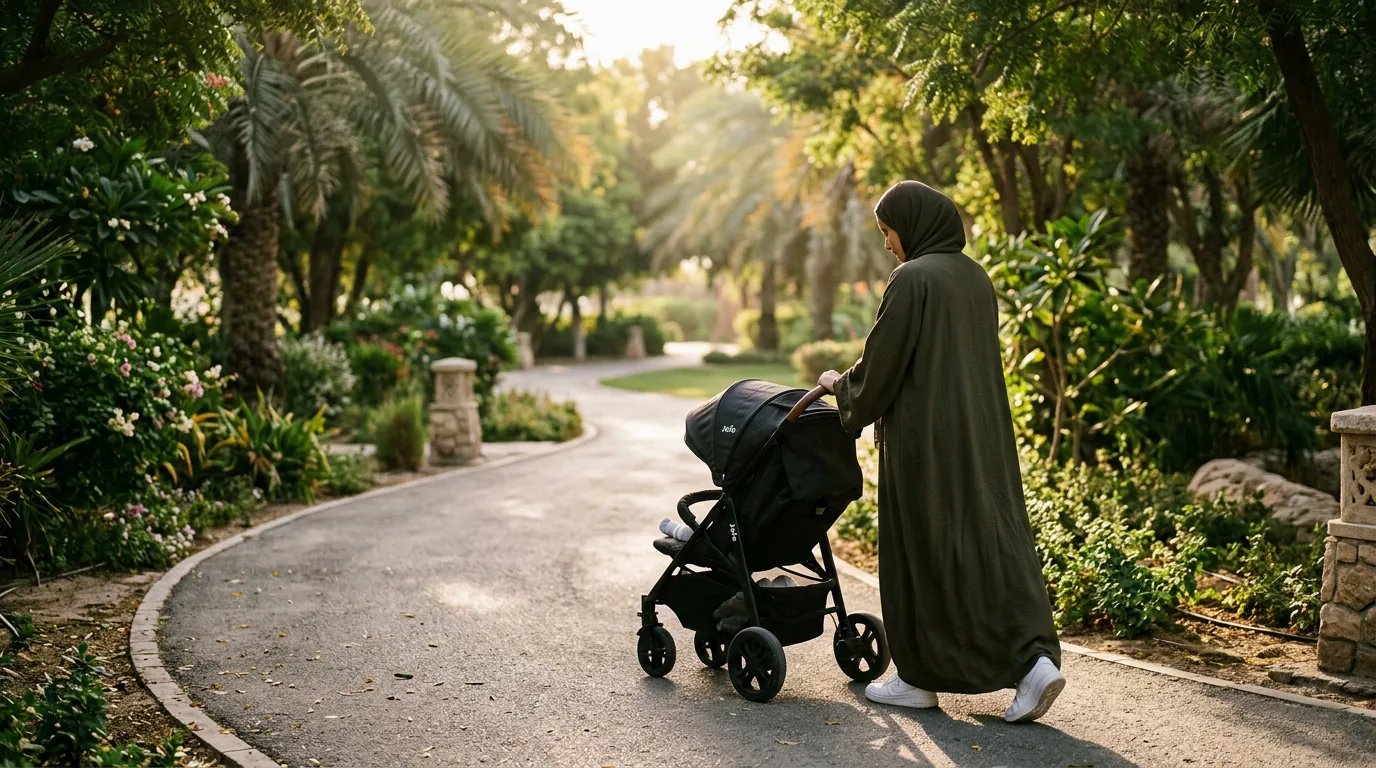
In the early weeks after birth, your body is still writing a new story. The idea of returning to exercise can feel both hopeful and heavy, especially when you are managing broken sleep, feeding rhythms and the quiet work of recovery. A gentle return is not about rushing back to a former self. It is about learning what your body needs now, in this season, with patience and attention.
Many new mothers in Qatar and the wider Gulf feel pressure to resume fitness quickly, sometimes because of old habits or social expectations. Yet the most useful approach is often the slowest one. Small, consistent movements can rebuild your sense of strength without overwhelming your healing tissues. This guide offers a calm, week-by-week path that respects your postnatal timeline and your daily realities.
Starting Where You Are, Not Where You Were
Before you begin any structured activity, take an honest look at your energy, sleep and physical comfort. If you were active before pregnancy, your body may remember certain movements, but your core and pelvic floor have still been through significant change. If you were less active, your starting point will naturally be softer. Both paths are valid and both benefit from the same first step: noticing how you feel.
Health guidelines suggest that new mothers can begin more intense activities after their six to eight week postnatal check, if they feel ready. Vigorous activity is not recommended if you were inactive before pregnancy. Speak to your doctor or midwife first if you have any concerns, pain, heaviness or leaking. No article can replace that individual conversation, and no timeline should override your own signals.
In the Gulf climate, heat and humidity shape every outdoor plan. Early morning or evening walks are usually more comfortable than midday movement. Indoors, a cool room with a fan or air conditioning can make floor exercises far more appealing. Choose a time when your baby is settled or when someone else can hold them, even for ten minutes. Those ten minutes matter more than a perfect hour.
Week One: Breathing and Awareness
Your first week is not about exercise in the traditional sense. It is about reconnecting with your breath and the deep muscles of your trunk. Sit on a chair or lie on your side with your knees bent. Breathe in slowly through your nose, letting your ribs expand, then exhale gently as if fogging a mirror. Repeat this for five slow breaths, several times a day.
Add a simple pelvic floor awareness practice. Imagine lifting the muscles between your pubic bone and tailbone, as if stopping the flow of urine, then release fully. Do not hold your breath or clench your jaw. This is a subtle movement, not a forceful squeeze. A few repetitions each day can help you regain a sense of connection before you add any load or impact.
Walking is your main physical activity this week. Start with five to ten minutes on flat ground, at a pace where you can talk comfortably. If you feel pressure in your pelvis or your bleeding increases, stop and rest. The goal is not distance or speed. The goal is to notice how your body responds to being upright and moving through space again.
Rebuilding Strength Without Strain
Strength training matters after pregnancy because it supports the muscles that carry you through daily tasks, like lifting your baby, bending over a cot, or carrying shopping bags. Guidelines recommend strengthening activities that work all major muscle groups at least two days a week. For a new mother, this can begin with body weight movements. These movements feel almost too simple, but are deeply effective.
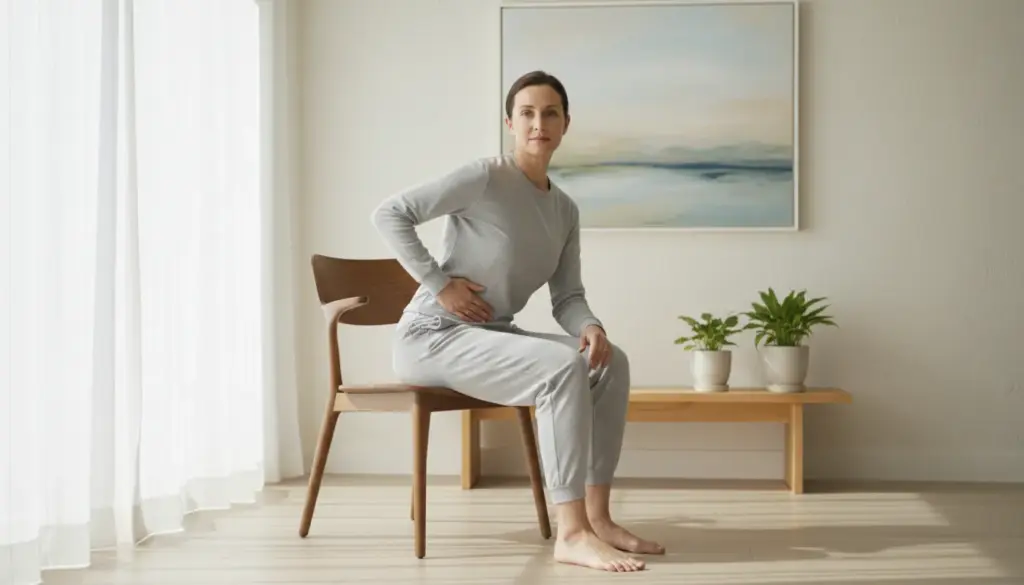
The table below offers a gentle progression for the first month of strength work. Each exercise should feel controlled and pain-free. Stop if you notice any bulging at your midline, pressure in your pelvis or leaking. These are signals to slow down and seek guidance from a women’s health physiotherapist, not to push through.
| Week | Exercise | Repetitions | Notes |
|---|---|---|---|
| 1 | Seated pelvic tilt | 8 to 10 | Slow and small, breathe normally |
| 2 | Wall sit | Hold 10 seconds, 3 times | Back flat against wall, knees soft |
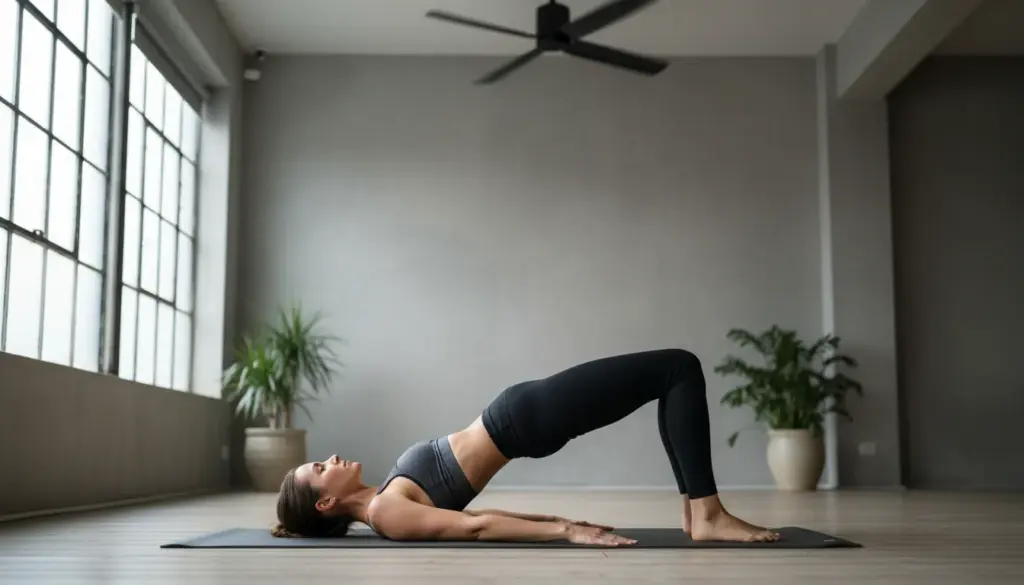
| 3 | Glute bridge | 8 to 10 | Lie on back, lift hips gently |
| 4 | Squat to chair | 8 to 10 | Sit and stand without using hands |
| 5 | Side lying leg lift | 8 to 10 each side | Keep hips stacked, move slowly |
After this first month, you can add resistance bands or light hand weights if your body feels ready. The key is to progress by small increments, not by sudden leaps. A strength session can be ten minutes long and still count. Two or three short sessions a week are easier to sustain than one long, exhausting effort.
Week Two: Adding Core and Hip Work
During week two, your walks can reach twenty minutes if you feel comfortable. You can also begin the glute bridge and squat to chair from the table. These movements wake up the muscles that support your lower back and pelvis. Move slowly, and pause between repetitions to check your breathing and your abdominal wall.
Core work after birth should not begin with crunches or planks. Instead, focus on gentle activation of the deep abdominal muscles. In a seated or side lying position, draw your lower belly gently away from your waistband as you exhale. Hold for a breath, then release. This is not a sucking in or bracing movement. It is a soft, inward lift.
If you have any separation of the abdominal muscles, known as diastasis recti, avoid movements that make your belly dome or bulge. This condition is common after pregnancy and certain exercises can worsen the gap between the muscles. A women’s health physiotherapist can assess this and give you specific guidance. Accessing physiotherapy through a doctor’s referral can be a valuable part of a safe return to exercise.
Building a Routine That Fits Your Life
A routine after birth rarely looks like a tidy weekly schedule. It looks like ten minutes while the baby naps, a walk to the supermarket instead of driving, or a few squats while the kettle boils. The most sustainable plan is one that can bend around your baby’s moods and your own energy. Aim for movement most days, even if some days it is only a short walk or a breathing session.
Guidelines suggest that adults aim for at least 150 minutes of moderate activity a week, spread over four or five days. For a new mother, this might mean six short walks of fifteen minutes, plus two gentle strength sessions. You do not need to hit that target immediately. Building towards it over several months is a reasonable and kind approach.
Moderate activity means your heart rate rises and you breathe faster, but you can still talk. If you can sing, you are working too lightly. If you cannot say more than a few words, you are working vigorously. In the early postnatal months, staying in the moderate zone is usually the safest and most enjoyable choice. Save running, fast cycling and high impact classes for later, after your body has rebuilt its foundation.
Week Three: Finding Your Rhythm
By week three, you may be ready for twenty to thirty minute walks on most days. You can also combine your strength exercises into a short circuit, moving from wall sit to glute bridge to squat with rests in between. Keep the total session under twenty minutes. The aim is to finish feeling awake and capable, not drained.
Consider the time of day that feels most realistic. Some mothers prefer early morning before the Gulf heat builds. Others find a late evening walk after the baby sleeps works better. There is no perfect hour. The best time is the one you can repeat without resentment. If you miss a day, simply begin again the next morning.
Notice what feels good and what feels strained. A slight muscle ache the next day is normal. Sharp pain, pressure, leaking or a feeling of heaviness in your pelvis is not. Those sensations deserve attention, rest and professional advice. Your return to exercise is not a race. It is a conversation with your body, and you are learning to listen again.
Moving Forward With Patience
As the weeks pass, your capacity will grow. You may add longer walks, gentle swimming or a postnatal exercise class if you feel ready. Swimming can be a lovely option if you have access to a pool. The water supports your joints and keeps you cool. Just wait until any bleeding has stopped and your postnatal check is complete.
Strength training should remain part of your week, twice if possible. This does not require a gym. A mat, a resistance band and your own body weight are enough. Over time, you might add more repetitions, slower tempos or slightly heavier loads. The goal is not to return to a previous shape. The goal is to feel strong enough for the life you are living now.
Your body has carried and delivered a child. It deserves a return that is gradual, respectful and full of small victories. A ten minute walk in the evening air, a quiet breathing practice before bed, a squat while holding your baby: these are not small things. They are the beginning of a new kind of strength, one built with patience and care.