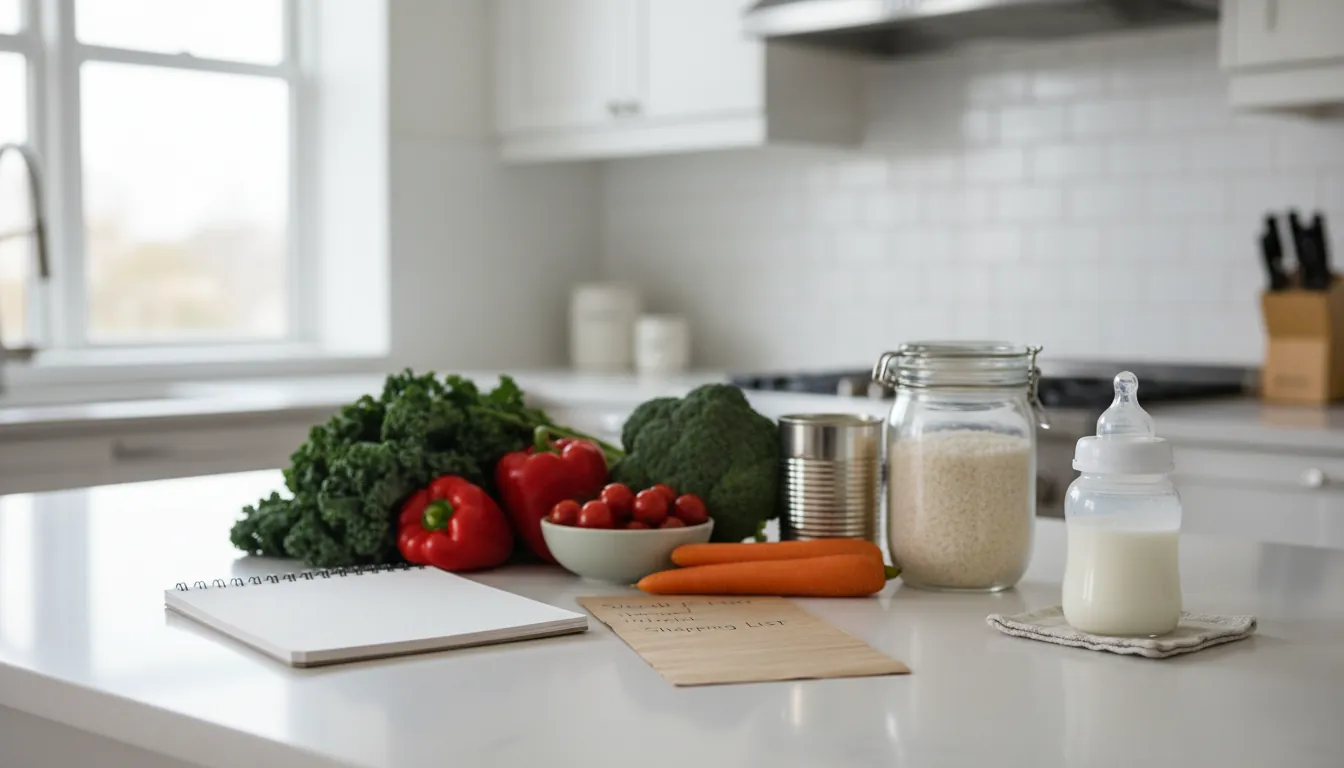
The first weeks with a baby turn familiar routines inside out. Meals that once happened at set times become scattered snacks grabbed between feeds, nappy changes and short naps. Money feels tighter too, because one income may be paused and the shopping list has grown longer. Eating well can start to feel like another impossible job. The truth is more forgiving. You do not need expensive ingredients, complicated recipes or a full night of sleep to put decent food on the table.
What you need is a calmer system. A little planning before you shop, a freezer stocked with useful basics and a handful of meals that work in any order. When you are running on broken sleep, decision-making is the first thing to go. Having a short list of reliable meals removes that daily question of what to cook. It also keeps spending predictable. In many regions, supermarkets carry plenty of budget-friendly staples, frozen vegetables, tinned pulses and own-brand items that can anchor a week of meals.
Start With a Weekly Plan, Not a Perfect Menu
A weekly meal plan is not about creating a restaurant menu. It is a simple way to buy only what you will use and avoid throwing food away. Before you shop, look at what is already in your fridge, cupboard and freezer. Use those ingredients as the starting point. A jar of lentils, half a bag of rice and some frozen spinach can become the base for several meals. Online recipe builders can help if you type in the foods you already have.
Write the list before you leave the house, and eat something first. Shopping while hungry leads to impulse buys that rarely help your budget. Supermarket own brands are worth trying, especially for tinned tomatoes, beans, oats and plain dairy. The difference between value and premium ranges is often small, while the price gap is not. If you are short on time, online grocery shopping can keep you away from the aisles altogether.
Keep the plan loose. A new baby does not respect a seven-day grid. Some days you will cook the intended meal, and some days you will pull something from the freezer. The point is to have enough ingredients at home for several simple meals, so you are never starting from zero at 6pm with a crying baby and an empty fridge.
Build Meals Around Low-Cost Staples
Starchy foods should sit at the centre of most meals. Potatoes with their skins, wholegrain bread, brown rice and wholewheat pasta are inexpensive and filling. Add vegetables and a source of protein such as beans, lentils, eggs, fish or lean meat. This structure works for a stir-fry, a soup, a pasta sauce or a baked potato. It also makes shopping easier because you are buying from a small set of categories rather than chasing individual recipes.
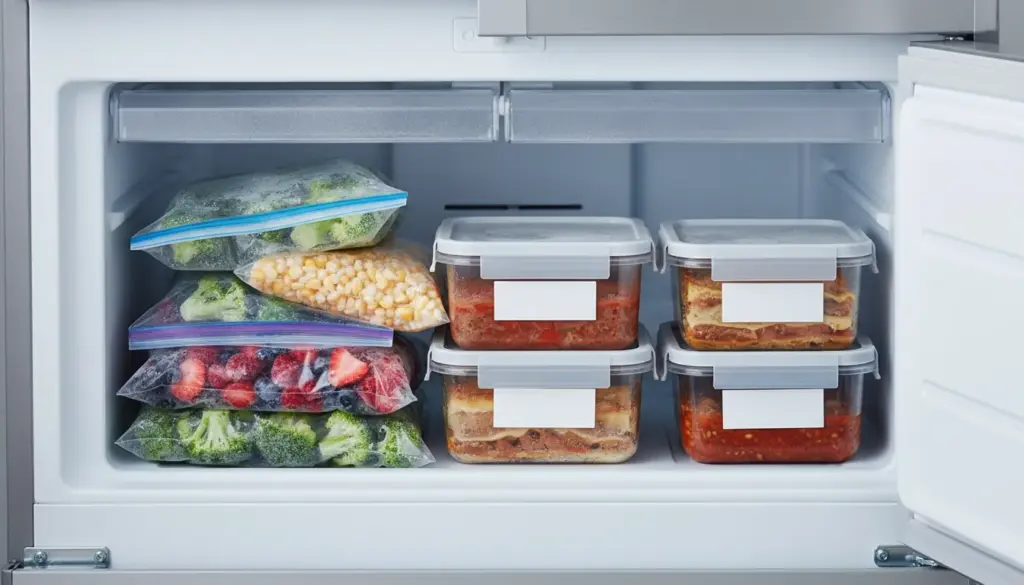
Frozen fruit and vegetables are a quiet budget win. They keep their nutrients, cost less than many fresh options and reduce waste because you use only what you need. Add frozen vegetables to pasta sauces, soups, stews, stir-fries and curries. Frozen fruit can be defrosted onto plain yogurt or porridge, or blended into a small smoothie. In hot climates, frozen produce also spares you from frequent trips to the market.
Here are some dependable meals that fit a new-parent budget and schedule. Try basing your meals on affordable starchy staples like potatoes, brown rice, or wholewheat pasta, then add vegetables and a protein source such as beans, lentils, eggs, or tinned fish. Preparing food at home is often cheaper and healthier than buying takeaways or ready meals because you control exactly what goes into each dish. A simple lentil and vegetable soup with crusty bread or spaghetti bolognese with extra vegetables and lentils are both filling, nutritious options that stretch expensive ingredients further.
- Chicken and vegetable stir-fry with reduced salt soya sauce, served with brown rice or wholewheat noodles, plus garlic, ginger and plain cashew nuts if you have them.
- Lentil and vegetable soup with crusty bread, made in one pot and easy to reheat.
- Spaghetti bolognese with extra vegetables and lentils stirred into the sauce, which stretches the meat further.
- Baked potato with baked beans and a small portion of grated cheese, with a side salad.
- Eggs scrambled with chopped onion, peppers and mushrooms on wholemeal toast.
- Fishcakes made from mashed potatoes, tinned salmon and herby low-fat cream cheese, served with peas and sweetcorn.
These meals share a common trait. They do not demand precise timing or constant attention. Most can be made in one pan or pot, and most reheat well the next day. That matters when a baby wakes mid-cooking and dinner has to wait.
Make the Kitchen Work Around the Baby
Cook Once, Eat Twice
Doubling a recipe takes little extra effort and gives you a second meal for a harder day. Cottage pie, fish pie and bolognese sauce all freeze well. Divide the extra portion into meal-sized containers before freezing, then label them clearly. On a chaotic evening, defrosting a homemade meal feels like a small act of self-care. It also stops the slide toward takeaways, which are convenient but rarely kind to a family budget.
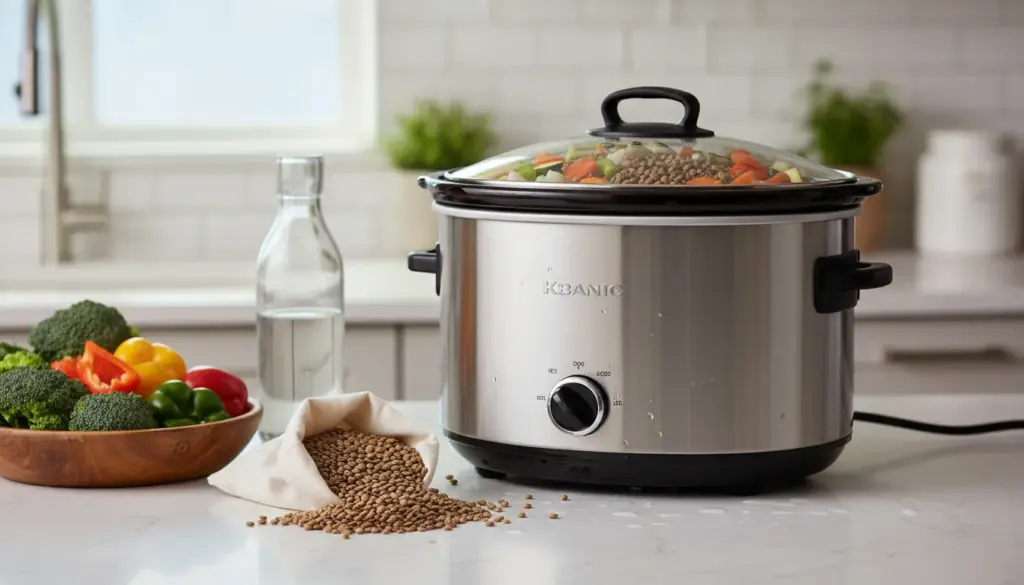
A slow cooker is a useful tool for this season of life. You prepare ingredients in the morning, often while the baby naps, and dinner is ready by evening. Stews, curries and soups work well. The slow heat also suits cheaper cuts of meat and dried pulses, which soften over time. If you do not own one, a large pot on a low flame can do similar work, though it needs more checking.
Stock the Fridge for One-Handed Eating
New parents often eat with one hand while holding a baby with the other. That changes what counts as a good meal. A bowl of soup is fine if you can set it down. A wrap, a filled roll or a plate of crackers with toppings may be easier. Keep wholegrain crackers, cottage cheese, tinned tuna, salmon, avocado and tomatoes on hand. They become a quick lunch without any cooking.
Prepare a daily food box before bed. Collect yogurt, fruit, crackers, cheese, boiled eggs or leftover grains and put them in one container in the fridge. The next day you can eat from it without thinking. A water bottle is just as important. Keep it filled and within reach during feeds, because thirst is easy to miss when you are focused on a baby.
Feed Yourself Without Guilt
The old pattern of breakfast, lunch and dinner often disappears in the early weeks. Four or five small meals can work better than three large ones. If you are awake several times in the night, a banana, a small yogurt or a glass of milk may be enough to keep you going. There is no need to prepare a full plate at 3am. The goal is steady nourishment, not culinary performance.
Involve older children when you can. Let them wash vegetables, stir a pot or set the table. They are more willing to try a new dish when they helped make it. If a child refuses the family meal, offer a simple alternative from the same food groups rather than cooking a separate dinner. This keeps the kitchen calm and the budget intact.
If money for food is genuinely short, do not carry that worry alone. In many regions, community groups, health centres and charitable organisations can point you toward food support. Speak to a doctor, midwife or health visitor if you are concerned about your own nutrition or your baby’s feeding. No budget tip replaces professional guidance when you need it. Eating well as a new parent is not about perfection. It is about keeping yourself fed, keeping the weekly spend steady and giving yourself permission to do less in the kitchen while you learn this new life.