In the first weeks after giving birth, your body can feel like unfamiliar territory. The softness around your middle, the heaviness in your pelvis and the tiredness that settles into every joint are all part of a massive transition. Among the many changes, the pelvic floor is one area that quietly asks for attention. These muscles formed a supportive sling for your bladder, uterus and bowel throughout pregnancy, and they need time and gentle practice to recover.
It helps to think of pelvic floor recovery as a slow return rather than a race. The muscles that stretched and worked so hard during pregnancy and birth can regain strength with consistent, low-key exercises. You do not need complicated equipment or a strict schedule. A few minutes of mindful movement each day can make a meaningful difference in how you feel when you lift your baby, walk up stairs or simply sit comfortably.
What the pelvic floor actually does
Labour and birth ask these muscles to relax and stretch in ways they never have before. Some women notice leaking when they cough, laugh or lift something heavy in the weeks after birth. Others feel a dull heaviness between the vagina and anus. These sensations can be unsettling, but they are common signals that the pelvic floor needs some focused care.
Signs your pelvic floor may need support
Not every postpartum body feels the same, and some women recover quickly without obvious symptoms. Still, a few signs deserve attention. You might leak a little urine when you sneeze, jump, or pick up your baby. You might feel a dragging or heavy sensation low in the pelvis, especially by evening. Some women also notice that sex feels different or less comfortable in the months after birth.
Starting gently in the first two weeks
The earliest days after birth are not the time for ambitious fitness goals. Your body is healing, and your pelvic floor is often swollen and tired. Gentle activation through breathing is one of the safest ways to reconnect with these deep muscles. Belly breathing, sometimes called diaphragmatic breathing, helps improve circulation and re-establish coordination between your breath and your pelvic floor.
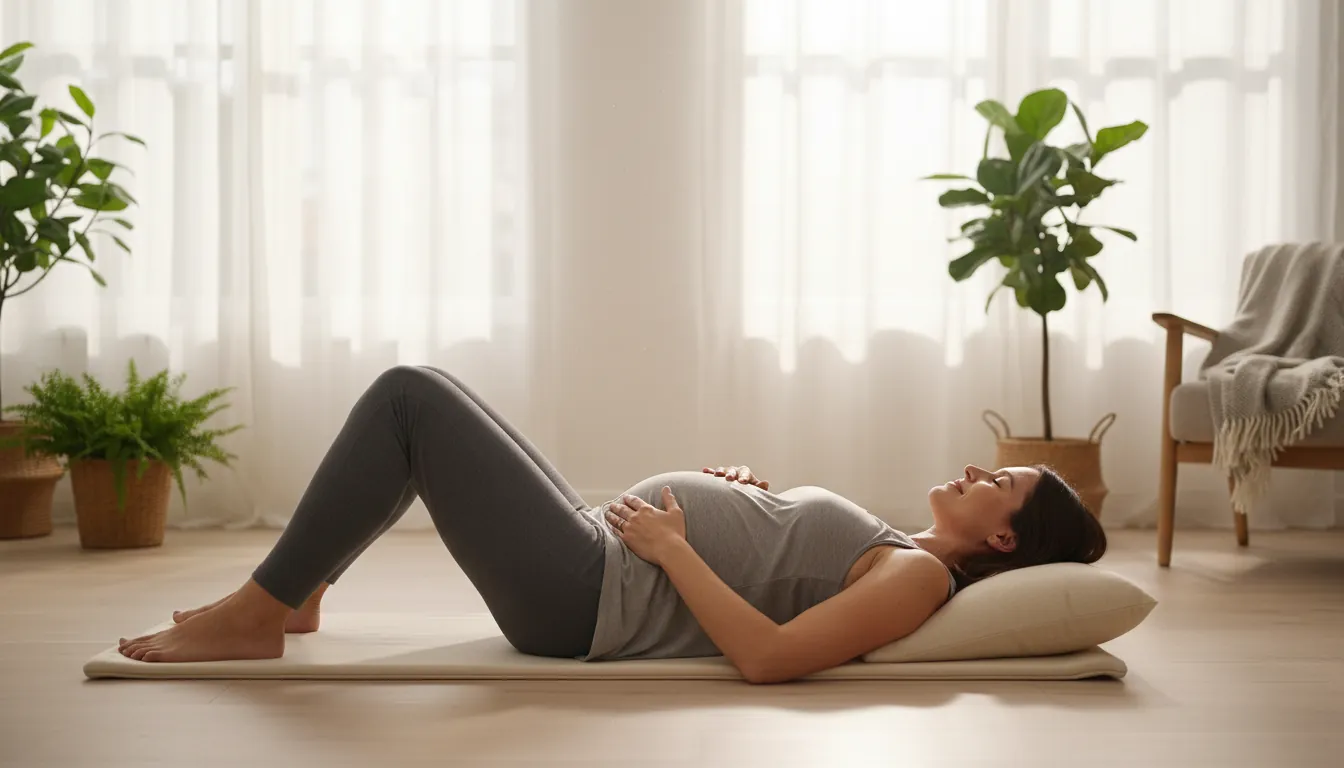
To try it, lie on your back or prop yourself up on several pillows. Place one hand on your upper belly and the other on your chest. Breathe in slowly through your nose and feel the hand on your belly rise while the hand on your chest stays still. As you breathe out through your mouth, let the belly soften down. Practising this for three to five minutes once or twice a day can feel calming and restorative.
Adding a subtle pelvic floor connection
Once belly breathing feels natural, you can begin to pair the exhale with a very gentle lift of the pelvic floor. Imagine drawing the muscles inward and upward, as if you were sipping a thick smoothie through a straw. This is not a forceful squeeze. It is a soft, internal awareness that helps the muscles remember their range of motion.
Rebuilding strength over the first eight weeks
As the days pass, your body will guide you toward more movement. Many women can restart gentle pelvic floor exercises from about 48 hours after birth, even if they had perineal trauma, but it is always wise to check with a doctor or midwife first. The key is to progress slowly and to stop if anything hurts. Your pelvic floor needs repetition without tension, not force.
One useful movement is the pelvic tilt. Lie on your back with your knees bent and your feet flat on the floor. Tighten your belly muscles by pulling your belly button toward your spine and press your lower back into the floor. You should feel your hips and pelvis rock back slightly. Hold for about six seconds while breathing smoothly, then relax. Repeating this eight to twelve times can help wake up the deep core muscles that work alongside the pelvic floor.
Movements that support the whole trunk
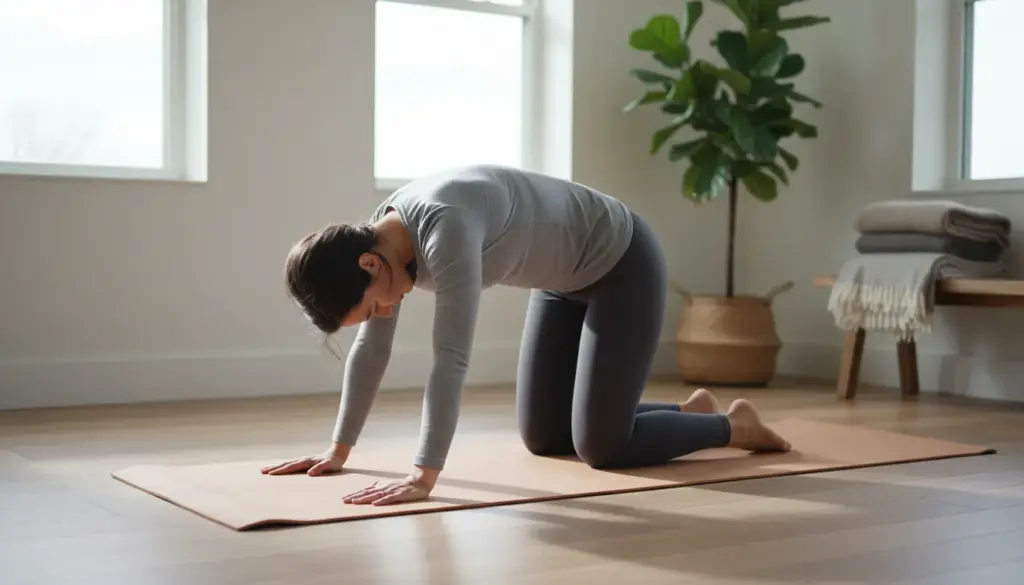
The pelvic floor does not work in isolation. It is part of a larger system that includes your deep abdominal muscles, your lower back and your diaphragm. Gentle movements that involve the whole trunk can help restore that connection. The cat-cow stretch is a good example. Start on your hands and knees with your shoulders above your wrists and your hips above your knees.
Another option is the pelvic tilt with heel slide. Lie on your back with one knee bent and the other leg straight. Pull your belly button toward your spine and press your lower back to the floor. Slowly slide the heel of the bent leg away from you, then bring it back. This movement encourages control through the pelvis while one leg moves, which is a skill you will use constantly when caring for a baby.
Practical ways to build a daily habit
Finding time for yourself with a newborn is genuinely difficult. The good news is that pelvic floor work does not require a yoga mat, a quiet room or a full workout. You can practise while feeding your baby, sitting in the car or waiting for the kettle to boil. The goal is to weave small moments of awareness into your existing routine rather than adding another task to an already full day.

Here are a few realistic ways to fit pelvic floor care into your day. You can practice simple exercises like belly breathing or pelvic tilts while lying down or propped on pillows. These movements help you reconnect with the muscles that support your bladder, uterus, and bowel. Over time, you can also do these movements while sitting or standing. This makes it easier to keep your pelvic floor strong during everyday activities.
- Practise belly breathing for a few minutes while your baby naps on your chest.
- Do a gentle pelvic floor lift every time you change a nappy.
- Try a pelvic tilt while lying on the floor next to your baby during tummy time.
- Add a cat-cow stretch after your morning shower while your muscles feel warm.
- Pair heel slides with an evening podcast or a few minutes of quiet before bed.
- Use feeding times as a cue to check your posture and soften your belly.
- Set a phone reminder for two short breathing breaks, one in the morning and one in the afternoon.
When to seek extra help
Some pelvic floor concerns need more than home exercises. If you feel a persistent heavy or bulging sensation between your vagina and anus, or if leaking continues for weeks without improvement, speak to a health professional. A pelvic floor physiotherapist or continence nurse can assess your muscles and suggest a more targeted plan. Your postnatal check at around six to eight weeks is a good moment to raise any questions.
It is also worth remembering that the muscles running down the middle of your stomach often separate during pregnancy. This is called diastasis recti, and the gap often narrows on its own in the weeks after birth. You can check the separation gently by lying on your back with your knees bent, lifting your shoulders slightly and feeling between the edges of the muscles above and below your belly button. If the gap feels wide or does not seem to be closing, a physiotherapist can offer guidance.